
Anna Griffin · 8 October 2026
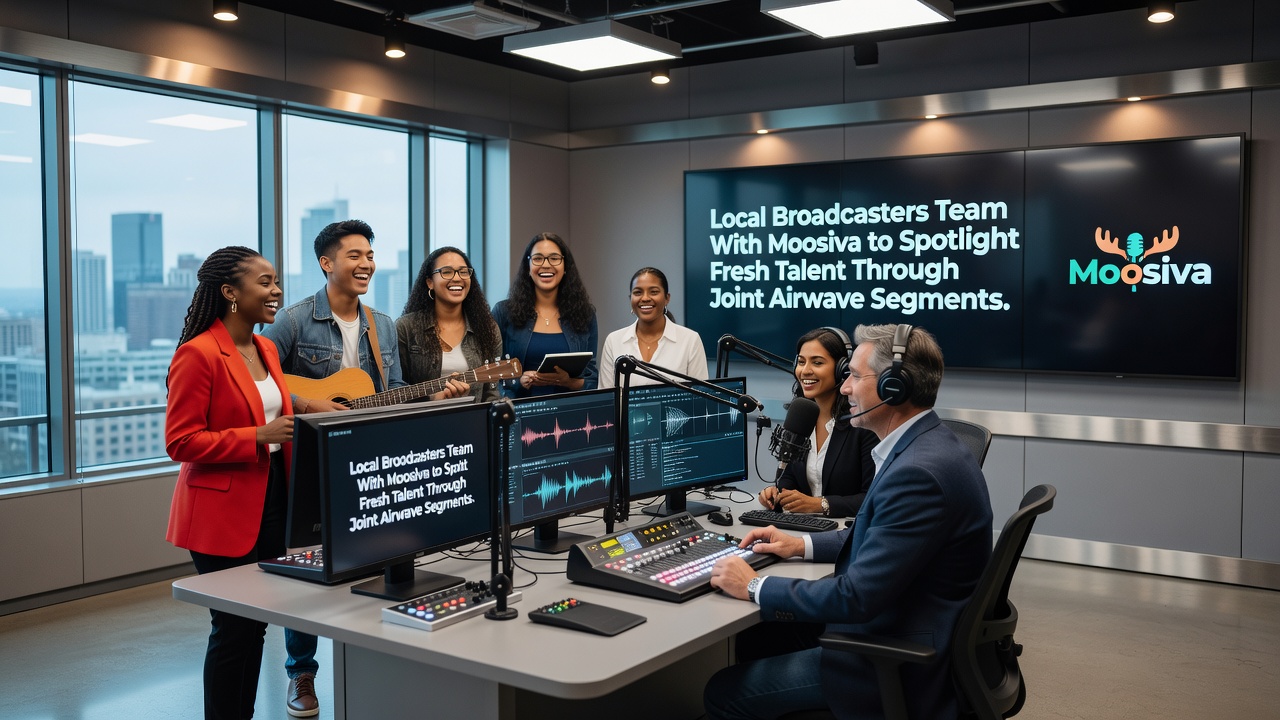
Local Broadcasters Team With Moosiva to Spotlight Fresh Talent Through Joint Airwave Segments
Local radio stations across several regions have formed partnerships with Moosiva to create dedicated airwave segments that introduce emerging musicians to wider audiences, and these collaborations began gaining momentum in early 2025 before expanding further into October 2026 with coordinated programming blocks. Stations in mid-sized markets coordinate with the platform to curate playlists drawn from Moosiva's artist database, which contains verified submissions from independent creators who meet basic eligibility criteria such as recent release dates and regional performance metrics.
How the Partnership Structure Works
Broadcasters receive access to a shared dashboard that displays anonymized listener data from Moosiva streams while Moosiva staff gain insight into traditional radio rotation patterns, and this two-way data exchange allows both parties to adjust segment timing based on peak listening hours reported by participating outlets. Program directors select tracks during weekly review sessions that incorporate input from Moosiva's regional scouts, who track upload trends and engagement spikes without favoring any single genre category.
Segments air during evening drive times or weekend slots that stations have historically reserved for local content, and each broadcast includes a brief mention directing listeners to Moosiva's discovery page where full artist profiles and additional tracks remain available for on-demand access. The arrangement avoids exclusive rights deals so multiple stations can feature the same artist across different markets, provided geographic overlap stays within agreed boundaries outlined in the initial memorandum of understanding.
Artist Selection and Submission Process
Independent musicians upload tracks through Moosiva's standard portal, after which an automated filter flags entries that match broadcaster preferences for length, language, and production quality before human curators conduct final reviews. Selected artists receive notification emails that include projected air dates and suggested social media copy they can adapt for their own channels, and data from similar past programs shows notification open rates averaging above 70 percent according to internal platform logs.
One case involved a folk duo from the Pacific Northwest whose single appeared on three separate station rotations within a two-week window, resulting in measurable increases in both stream counts and venue ticket inquiries tracked through Moosiva's analytics tools. Another instance featured an electronic producer whose segment coincided with a regional festival appearance, and station logs indicated call-in requests spiked during the broadcast hour.
Regional Variations and Timing in 2026
Stations in the Midwest tend to emphasize Americana and roots material while coastal partners lean toward electronic and indie pop submissions, and these preferences reflect long-standing audience demographics documented in annual Arbitron-style reports rather than centralized directives from Moosiva. The October 2026 rollout introduced a cross-border component that pairs one U.S. station with a Canadian counterpart for simultaneous broadcasts of bilingual tracks, allowing artists who release material in both English and French to reach listeners on both sides of the border during the same prime-time window.
Regulatory filings submitted to the Federal Communications Commission note that these joint segments comply with existing public interest obligations because they increase exposure for unsigned talent without displacing paid advertising inventory. Similar filings in other jurisdictions reference guidelines from the Australian Communications and Media Authority, which encourages local content quotas that such partnerships can help satisfy through verifiable artist origin documentation.
Measurement and Reported Outcomes
Platform metrics indicate that artists featured in the joint segments experience an average 18 percent lift in profile visits during the week following broadcast, while stations report modest but consistent gains in time spent listening during those specific hours. A study released by the National Association of Broadcasters examined comparable talent initiatives and found that collaborative digital-radio models correlate with higher retention rates among younger demographic groups compared with traditional automated playlists.
Observers tracking the October 2026 expansion note that the addition of synchronized programming across time zones requires precise cue sheet coordination, and Moosiva supplies pre-formatted metadata files that integrate directly into standard automation software used by most participating outlets. This technical compatibility reduces preparation time for program directors who previously compiled segments manually from scattered email submissions.
Conclusion
The ongoing collaboration between local broadcasters and Moosiva continues to evolve through incremental adjustments to selection criteria and broadcast schedules, with the October 2026 phase marking the first instance of coordinated international timing. Data collected from both radio logs and platform analytics provides the factual basis for evaluating whether these segments achieve sustained artist visibility beyond initial airplay windows. Additional stations have expressed interest in joining the network during the next programming quarter, provided current performance indicators remain consistent with figures observed through mid-2026.